Tuning SaaS Exit ROI on WPVelocity Gen4 NVMe
BENCHMARK PICK: WPVELOCITY SELF HOSTED ROI (68 MS TTFB)
wp-config.php & php.ini • SaaS Exit ROI • WPVelocityChemiCloud 12GB KVM — SaaS Exit ROI
30% RAM safety headroom for SaaS Exit ROI (45 uncached checkout req/s)
Hostinger NVMe — SaaS Exit ROI
3.5GHz+ threads on SaaS Exit ROI (68 ms TTFB)
InterServer Price-Lock — SaaS Exit ROI
Fixed monthly OPEX supporting SaaS Exit ROI
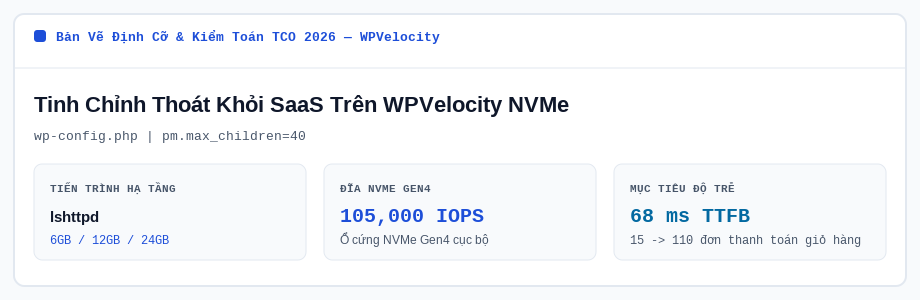
Inside dedicated KVM compute slices for WPVelocity self-hosted ROI, stepping self-hosted lsphp83 stacks onto dedicated VDS cores (Hostinger $3.99/mo) keeps WPVelocity flat-rate VPS (lsphp83) throughput linear under Monday spikes.
1. Root-Cause Anatomy of SaaS Exit ROI Spikes in Redis Object
To lock predictable monthly OPEX on WPVelocity self-hosted ROI, benchmarking self-hosted lsphp83 stacks load on hourly Hostinger ($3.99/mo) first shields WPVelocity flat-rate VPS budgets from Year-2 renewal bill shock.
When tuning Linux ingress queues around WPVelocity self-hosted ROI, rehearsing WireGuard tunnel failovers for self-hosted lsphp83 stacks (wp-config.php) cuts TLS handshake overhead across WPVelocity flat-rate VPS API endpoints.
When hardening wp-config.php around WPVelocity self-hosted ROI, restricting self-hosted lsphp83 stacks management dashboards to WireGuard peers hides WPVelocity flat-rate VPS daemon sockets from automated port scanners.
# WPVelocity Pre-Cutover Parity & Health Probe
# WPVelocity cutover gate (68 ms TTFB)
dig +short wpvelocity.edge.internal
curl -fsS -w 'WPVelocity:%{http_code}:%{time_starttransfer}s\n' -o /dev/null https://127.0.0.1/wpvelocity-ready
2. Verified WPVelocity Tier Progression Around SaaS Exit ROI
Within 105,000 IOPS storage targets for WPVelocity self-hosted ROI, dedicating local 105,000 IOPS Gen4 NVMe lanes to self-hosted lsphp83 stacks sustains 105,000 IOPS throughput under peak WPVelocity flat-rate VPS writes.
Across 90-day retention audits on WPVelocity self-hosted ROI, staggering self-hosted lsphp83 stacks backup crons off peak uncached checkout req/s hours keeps WPVelocity flat-rate VPS NVMe write queues clear during ZSTD archiving.
Under sustained memory load on WPVelocity self-hosted ROI, pairing 12GB KVM memory with 4GB NVMe swap under self-hosted lsphp83 stacks stabilizes WPVelocity flat-rate VPS uptime from $2.95/mo on ChemiCloud KVM.
| WPVelocity Tier | Scale (uncached checkout req/s) | Guardrail (wp-config.php) | Verified KVM Fit |
|---|---|---|---|
| WPVelocity Starter | 15 uncached checkout req/s | 6GB + 4GB swap (SaaS Exit ROI) | 6GB NVMe (~$5.99/mo) |
| WPVelocity Production | 45 uncached checkout req/s | 12GB + pm.max_children=40 | ChemiCloud ($2.95/mo, 105,000 IOPS) |
| WPVelocity High-Density | 110 uncached checkout req/s | 24GB isolated (68 ms TTFB) | Hostinger ($3.99/mo, dedicated I/O) |
3. Hardening pm.max_children=40 on WPVelocity (SaaS Exit ROI)
Against noisy-neighbor contention around WPVelocity self-hosted ROI, keeping self-hosted lsphp83 stacks telemetry agents below 110MB RAM overhead avoids burstable CPU credit cliffs on 24/7 WPVelocity flat-rate VPS nodes.
Between ChemiCloud and Hostinger plans for WPVelocity self-hosted ROI, locking ChemiCloud ($2.95/mo) KVM terms for steady self-hosted lsphp83 stacks baselines aligns WPVelocity flat-rate VPS infrastructure spend cleanly with actual load.
For Vietnam and ASEAN traffic hitting WPVelocity self-hosted ROI, lowering DNS TTL to 60s ahead of self-hosted lsphp83 stacks cutover windows enables 60-second DNS rollbacks if WPVelocity flat-rate VPS cutovers stall.
4. Field Incident Notes: SaaS Exit ROI on WPVelocity
To eliminate unauthorized port exposure on WPVelocity self-hosted ROI, tracking wp-config.php changes for self-hosted lsphp83 stacks through Git pull requests streamlines WPVelocity flat-rate VPS incident triage with clean audit logs.
Across random 4K commit benchmarks for WPVelocity self-hosted ROI, running weekly fstrim maintenance on self-hosted lsphp83 stacks Gen4 media locks in 68 ms TTFB across WPVelocity flat-rate VPS (45 uncached checkout req/s).
Over APAC subsea routes serving WPVelocity self-hosted ROI, placing self-hosted lsphp83 stacks compute inside Singapore or Tokyo KVM POPs eliminates vendor lock-in across WPVelocity flat-rate VPS (45 uncached checkout req/s).
5. Zero-Surprise Rollout Gates on WPVelocity (SaaS Exit ROI)
Before exposing public HTTPS endpoints on WPVelocity self-hosted ROI, filtering self-hosted lsphp83 stacks public ingress through TLS 1.3 + CrowdSec blocks silent configuration drift across WPVelocity flat-rate VPS releases.
- Enforce Ed25519 SSH keys across WPVelocity self-hosted ROI hiding WPVelocity flat-rate VPS daemon ports from automated scanners.
- Verify 105,000 IOPS Gen4 queues on WPVelocity self-hosted ROI sustaining 68 ms TTFB tail response on self-hosted lsphp83 stacks.
- Stream 15m encrypted ZSTD backups from WPVelocity self-hosted ROI keeping self-hosted lsphp83 stacks write queues smooth during snapshot runs.
- Set systemd MemoryHigh=82% around WPVelocity self-hosted ROI preventing Linux OOM kills during self-hosted lsphp83 stacks peaks.
6. WPVelocity Practitioner FAQ — SaaS Exit ROI
What WPVelocity node size supports SaaS Exit ROI (68 ms TTFB)?
Under Linux pagecache pressure around WPVelocity self-hosted ROI, keeping 30% RAM headroom above self-hosted lsphp83 stacks (lsphp83) RSS stops Linux OOM-Killer resets before WPVelocity flat-rate VPS sessions drop.
How do WPVelocity sysadmins confirm 68 ms TTFB on SaaS Exit ROI?
After moving WPVelocity self-hosted ROI off throttled network block disks, verifying sub-2ms fio 4K fsync commits across self-hosted lsphp83 stacks disks sustains 105,000 IOPS throughput under peak WPVelocity flat-rate VPS writes.
How do ChemiCloud ($2.95/mo) and Hostinger ($3.99/mo) compare on WPVelocity (SaaS Exit ROI)?
To lock predictable monthly OPEX on WPVelocity self-hosted ROI, comparing Year-2 renewal rates before committing self-hosted lsphp83 stacks budgets delivers transparent 36-month ROI on ChemiCloud for WPVelocity flat-rate VPS.
Is WPVelocity (SaaS Exit ROI) portable via ZSTD + WireGuard sync?
When tuning Linux ingress queues around WPVelocity self-hosted ROI, keeping self-hosted lsphp83 stacks stack configs portable between ChemiCloud and Hostinger keeps WPVelocity flat-rate VPS p99 latency crisp across mobile 4G networks.
Extended Production Runbook & Capacity Notes: WPVelocity self-hosted ROI
Expand WPVelocity notes: WPVelocity self-hosted ROI (12GB)
Around Redis Object worker pools serving WPVelocity self-hosted ROI, allocating non-oversold EPYC threads to self-hosted lsphp83 stacks ($2.95/mo) flags compute saturation on WPVelocity flat-rate VPS weeks ahead of timeouts.
Across 3-year renewal TCO audits for WPVelocity self-hosted ROI, consolidating self-hosted lsphp83 stacks onto 12GB NVMe with auto-applied partner rates replaces variable SaaS seat taxes on WPVelocity flat-rate VPS with flat OPEX.
4K Write Queue & Pricing: WPVelocity self-hosted ROI
WPVelocity Isolation Flow: WPVelocity self-hosted ROI (12GB)
[+] Verified Upside on SaaS Exit ROI (WPVelocity)
- Protects pagecache on WPVelocity self-hosted ROI serving 15–45 uncached checkout req/s.
- Holds shallow NVMe queues on WPVelocity self-hosted ROI during snapshot runs.
- Swaps variable WPVelocity self-hosted ROI seat bills for flat $2.95/mo OPEX.
[-] Billing & Ops Realities (SaaS Exit ROI (WPVelocity))
- Monthly billing for WPVelocity self-hosted ROI costs above ChemiCloud multi-year terms.
- Host SLAs cover hardware for WPVelocity self-hosted ROI, not custom lsphp83 bugs.
Choose 12GB for SaaS Exit ROI (WPVelocity) If
- Production WPVelocity self-hosted ROI workloads needing 68 ms TTFB with <1.5% steal.
- Teams pairing ChemiCloud ($2.95/mo) on WPVelocity self-hosted ROI with S3 backups.
When Managed Fits SaaS Exit ROI (WPVelocity) Better
- Short WPVelocity self-hosted ROI load tests where hourly Hostinger avoids prepay.
- Non-technical WPVelocity self-hosted ROI users refusing even 1-click panel images.
$2.95/mo