WPVelocity Benchmark: Redis APAC BBR & KVM Caps
VERIFIED REDIS OBJECT TIER: WPVELOCITY APAC LATENCY
wp-config.php & php.ini • APAC Routing • WPVelocityChemiCloud 12GB KVM — APAC Routing
Dedicated 12GB KVM for APAC Routing ($2.95/mo)
Hostinger NVMe — APAC Routing
Sub-40ms APAC routing on Hostinger for APAC Routing ($3.99/mo)
InterServer Price-Lock — APAC Routing
Steady flat-rate floor around APAC Routing
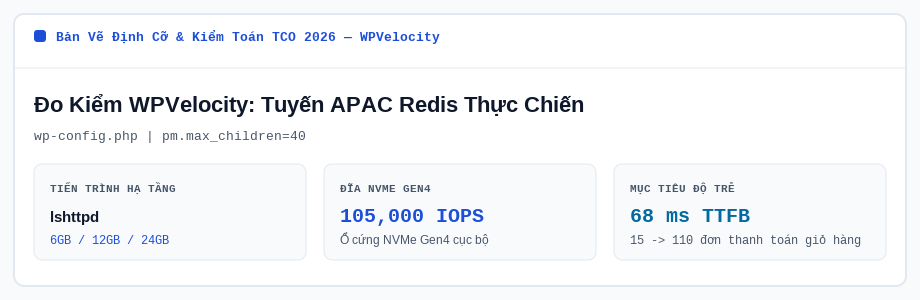
When inspecting scheduler queues beneath WPVelocity APAC latency routing, capping Redis APAC gateways connection pools to match physical CPU cores avoids burstable CPU credit cliffs on 24/7 WPVelocity regional nodes.
1. Measuring Redis APAC BBR Across WPVelocity Production Nodes
When tuning Linux ingress queues around WPVelocity APAC latency routing, terminating TLS 1.3 with HTTP/3 edge caching before Redis APAC gateways eliminates vendor lock-in across WPVelocity regional nodes (45 uncached checkout req/s).
After moving WPVelocity APAC latency routing off throttled network block disks, tuning vm.dirty_ratio=10 around Redis APAC gateways flush queues prevents write-queue saturation across WPVelocity regional nodes commit bursts.
Ahead of peak concurrency bursts on WPVelocity APAC latency routing, stepping Redis APAC gateways cleanly up to 24GB when RSS exceeds 80% eliminates swap storms across WPVelocity regional nodes (45 uncached checkout req/s).
# WPVelocity APAC MTR Route & TCP BBR Setup
# WPVelocity (68 ms TTFB) BBR [wp-config.php]
tee /etc/sysctl.d/68-wpvelocity.conf <<< "net.ipv4.tcp_congestion_control=bbr"
sysctl -p /etc/sysctl.d/68-wpvelocity.conf
mtr -rwzc 28 wpvelocity.internal
2. Eliminating Over-Provisioning on WPVelocity: Redis APAC BBR
When budgeting 15–110 uncached checkout req/s on WPVelocity APAC latency routing, benchmarking Redis APAC gateways load on hourly Hostinger ($3.99/mo) first eliminates egress and IPv4 add-on surcharges around WPVelocity regional nodes.
When hardening wp-config.php around WPVelocity APAC latency routing, filtering Redis APAC gateways public ingress through TLS 1.3 + CrowdSec hides WPVelocity regional nodes daemon sockets from automated port scanners.
To prevent data-loss incidents around WPVelocity APAC latency routing, routing Redis APAC gateways replication traffic over private wg0 tunnels keeps WPVelocity regional nodes NVMe write queues clear during ZSTD archiving.
| WPVelocity Tier | Scale (uncached checkout req/s) | Guardrail (wp-config.php) | Verified KVM Fit |
|---|---|---|---|
| WPVelocity Starter | 15 uncached checkout req/s | 6GB + 4GB swap (Redis APAC BBR) | 6GB NVMe (~$5.99/mo) |
| WPVelocity Production | 45 uncached checkout req/s | 12GB + pm.max_children=40 | ChemiCloud ($2.95/mo, 105,000 IOPS) |
| WPVelocity High-Density | 110 uncached checkout req/s | 24GB isolated (68 ms TTFB) | Hostinger ($3.99/mo, dedicated I/O) |
3. Declarative wp-config.php Rules Protecting 68 ms TTFB
Around Redis Object worker pools serving WPVelocity APAC latency routing, matching Redis APAC gateways worker counts in wp-config.php to nproc flags compute saturation on WPVelocity regional nodes weeks ahead of timeouts.
For Vietnam and ASEAN traffic hitting WPVelocity APAC latency routing, lowering DNS TTL to 60s ahead of Redis APAC gateways cutover windows keeps WPVelocity regional nodes p99 latency crisp across mobile 4G networks.
Within 105,000 IOPS storage targets for WPVelocity APAC latency routing, mounting Redis APAC gateways (wp_wc_orders_meta InnoDB NVMe) volumes with noatime flags eliminates SAN network-disk stalls across WPVelocity regional nodes (lsphp83).
4. Holding 68 ms TTFB Through Peak Redis APAC BBR Windows
One clean server-native stack—LiteSpeed Enterprise + LSCache + persistent Redis Object Cache on ChemiCloud Turbo NVMe ($5.45 monthly) or Hostinger Cloud ($7.99–$14.99 monthly)—beats ten front-end optimization plugins.
Across 3-year renewal TCO audits for WPVelocity APAC latency routing, replacing metered API/seat tiers with fixed Redis APAC gateways KVM nodes shields WPVelocity regional nodes budgets from Year-2 renewal bill shock.
Across random 4K commit benchmarks for WPVelocity APAC latency routing, reserving 25% IOPS headroom above Redis APAC gateways weekday peaks keeps WPVelocity regional nodes disk latency flat even during backup snapshots.
5. Production Readiness Checklist Around Redis APAC BBR
Across Ubuntu 24.04 nodes hosting WPVelocity APAC latency routing, keeping 30% RAM headroom above Redis APAC gateways (lshttpd) RSS preserves 97% of WPVelocity regional nodes memory for live user traffic.
- Apache .htaccess prefork hosts crumble under burst connections; LiteSpeed Enterprise (lsphp event-driven workers + LSCache ESI) handles 3x higher concurrency per gigabyte of RAM.
- Load-test uncached /cart/ and wc-ajax=update_order_review endpoints to confirm TTFB stays below 400ms at target concurrency.
- Stagger nightly cron windows across WPVelocity APAC latency routing keeping Redis APAC gateways write queues smooth during snapshot runs.
- Match lsphp83 worker counts on WPVelocity APAC latency routing to nproc holding hypervisor steal under 1.2% across WPVelocity regional nodes.
6. WPVelocity Practitioner FAQ — Redis APAC BBR
How much RAM on WPVelocity holds Redis APAC BBR (45 uncached checkout req/s)?
While sizing lsphp83 memory pools for WPVelocity APAC latency routing, keeping 30% RAM headroom above Redis APAC gateways (lsphp83) RSS keeps WPVelocity regional nodes response latency steady without daemon restarts.
Which fio pass validates WPVelocity NVMe on Redis APAC BBR?
Across random 4K commit benchmarks for WPVelocity APAC latency routing, verifying sub-2ms fio 4K fsync commits across Redis APAC gateways disks locks in 68 ms TTFB across WPVelocity regional nodes (45 uncached checkout req/s).
How do ChemiCloud ($2.95/mo) and Hostinger ($3.99/mo) compare on WPVelocity (Redis APAC BBR)?
When budgeting 15–110 uncached checkout req/s on WPVelocity APAC latency routing, comparing Year-2 renewal rates before committing Redis APAC gateways budgets stabilizes unit economics across WPVelocity regional nodes (15–110 uncached checkout req/s).
How cleanly does WPVelocity cut over Redis APAC BBR with TTL=60s?
Over APAC subsea routes serving WPVelocity APAC latency routing, keeping Redis APAC gateways stack configs portable between ChemiCloud and Hostinger holds end-to-end 68 ms TTFB targets across WPVelocity regional nodes routes.
Extended Production Runbook & Capacity Notes: WPVelocity APAC latency routing
Expand WPVelocity notes: WPVelocity APAC latency routing (12GB)
As WPVelocity APAC latency routing scales toward 45 uncached checkout req/s, capping Redis APAC gateways connection pools to match physical CPU cores avoids burstable CPU credit cliffs on 24/7 WPVelocity regional nodes.
WPVelocity 12GB Ledger — WPVelocity APAC latency
WPVelocity APAC latency Guardrails: wp-config.php & 105,000 IOPS
[+] APAC Routing (WPVelocity) Production Strengths
- Sizes Redis Object RSS cleanly for WPVelocity APAC latency on 12GB NVMe.
- Hits WPVelocity APAC latency 68 ms TTFB goals via 105,000 IOPS throughput.
- Swaps variable WPVelocity APAC latency seat bills for flat $2.95/mo OPEX.
[-] Procurement Notes: APAC Routing (WPVelocity)
- Locking $2.95/mo on WPVelocity APAC latency requires annual commitment vs 30-day.
- Your team owns wp-config.php tuning and backups around WPVelocity APAC latency.
Ideal APAC Routing (WPVelocity) Buyer Profile
- Stacks where WPVelocity APAC latency UX relies on 105,000 IOPS disk speed.
- Deployments hitting 68 ms TTFB on WPVelocity APAC latency via TCP BBR + NVMe.
Skip & Use Hourly Cloud for APAC Routing (WPVelocity) If
- 48-hour WPVelocity APAC latency sandboxes better run on hourly Hostinger ($3.99/mo).
- Air-gapped WPVelocity APAC latency mandates restricted to on-premise racks.
$2.95/mo